Blog
March 20, 2026

Nonprofit technology trends are evolving rapidly as organizations navigate responsible AI adoption, data privacy, and digital transformation.

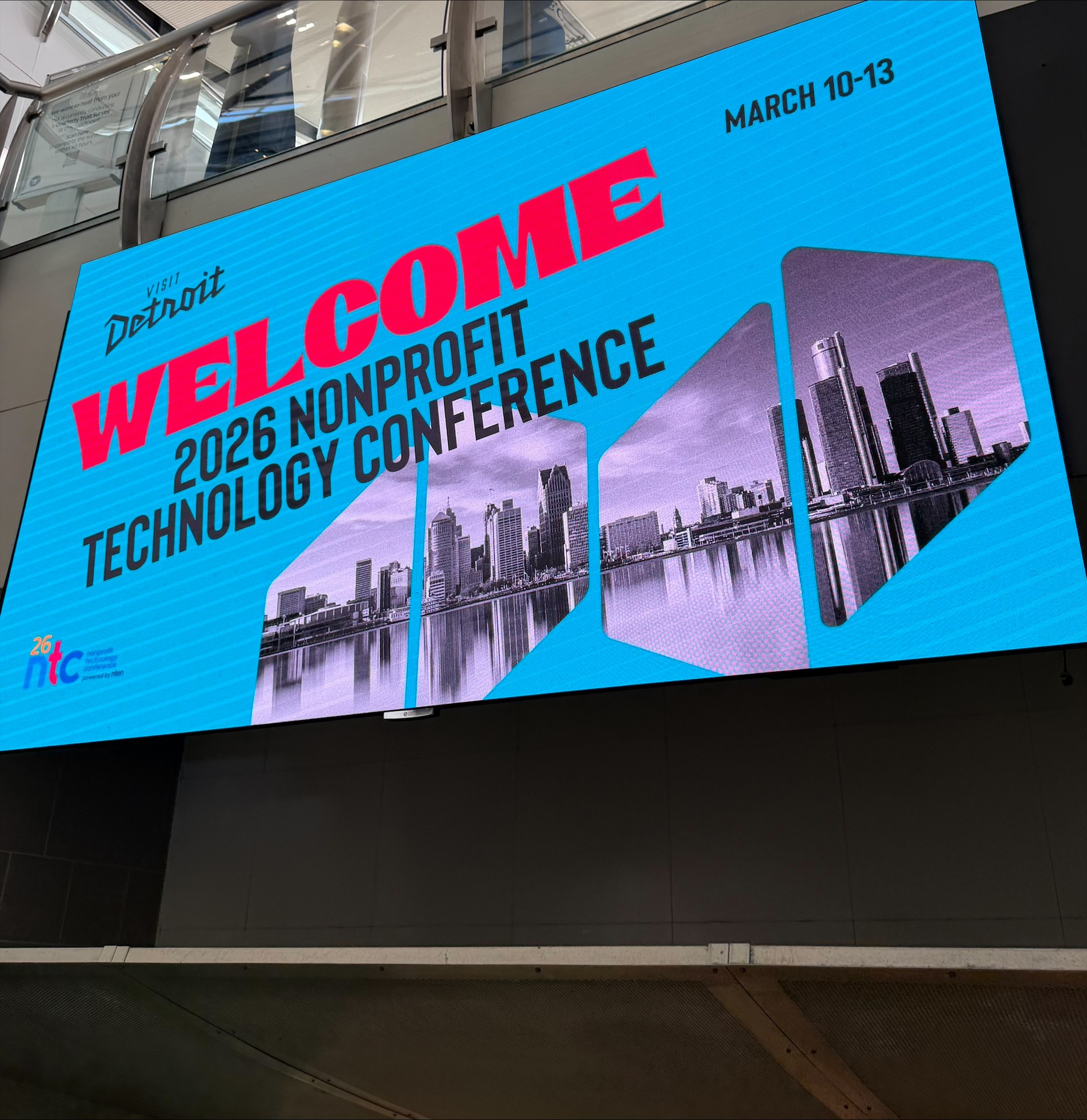
Steph Kirby Anderson, Nonprofit Business Development Director, and Jaemi Loeb, Manager, recently attended the NTEN Nonprofit Technology Conference (NTC) in Detroit. The following insights highlight the most pressing nonprofit technology trends shaping the sector today, including responsible AI adoption, data privacy, and strategies for navigating ongoing digital transformation.
Each year, NTEN’s Nonprofit Technology Conference convenes nonprofit leaders, technology executives, and strategists to examine how technology can better enable mission outcomes. What distinguishes NTC is its emphasis on transparency, creating space for organizations to share not only successes, but also implementation challenges and lessons learned.
At this year’s conference, one theme was clear. The nonprofit sector is operating in a period of accelerated technological change. Organizations are working to realize the benefits of innovation while managing increasing risks related to artificial intelligence, cybersecurity, and data governance within constrained resource environments.
In many cases, this is prompting organizations to take a more deliberate approach to evaluating technology decisions and defining clear paths forward.
Artificial intelligence in nonprofits is rapidly moving from experimentation to strategic consideration. However, adoption is not being driven by speed alone. Nonprofit leaders are prioritizing governance, transparency, and alignment with mission objectives as foundational requirements for AI implementation.
A consistent framework emerging across organizations includes:
This structured approach reflects a broader shift in how nonprofits are evaluating AI. The focus has extended beyond efficiency gains and now includes risk mitigation, ethical considerations, and long-term sustainability.
It also reflects the reality that responsible AI adoption is as much a strategic and organizational challenge as it is a technical one.
Early adoption efforts have reinforced this need. Several foundations, for example, piloted AI-enabled grant review processes but paused deployment due to concerns related to bias, explainability, and transparency. These experiences highlight a critical point: without strong governance, AI can introduce unintended risk into mission-critical processes.
For nonprofit organizations, successful AI adoption depends on establishing clear policies, strengthening data governance frameworks, and investing in thoughtful change management.
As digital transformation accelerates, data privacy and cybersecurity in nonprofits have become board-level priorities.
Nonprofits are responsible for safeguarding highly sensitive constituent data, often representing vulnerable populations. As organizations adopt cloud platforms, generative AI tools, and data-driven systems, the complexity of managing and protecting that information continues to increase.
Key questions nonprofit leaders are addressing include:
How is data governed, accessed, and secured across third-party platforms?
These considerations are particularly critical as AI and agent-based technologies increasingly depend on centralized organizational data.
Across the sector, data governance and cybersecurity are no longer viewed solely as IT responsibilities. They are enterprise-wide priorities requiring alignment across executive leadership, technology teams, and program stakeholders.
Addressing these challenges often requires a combination of technical expertise, clear governance models, and cross-functional alignment.
Nonprofit organizations are navigating a complex operating environment shaped by rapid technological innovation, evolving security risks, and rising expectations for transparency and impact.
At the same time, many organizations face persistent resource constraints, including limited staffing and funding. As a result, nonprofit leaders are adopting more disciplined and adaptive approaches to digital transformation.
Common strategies include:
These approaches enable organizations to innovate responsibly while maintaining operational resilience and focus.
Translating these strategies into execution, however, often requires additional capacity and a structured approach to prioritization and roadmap development.
The path forward for nonprofit technology is not defined by adoption alone, but by how effectively organizations align innovation with governance, risk management, and mission impact.
Increasingly, nonprofit leaders are recognizing that success in this environment depends on thoughtful planning, strong governance, and the ability to adapt as technologies evolve.
Organizations that take a structured, strategic approach to emerging technology will be best positioned to drive impact while managing risk.
At Attain Partners, we support nonprofit organizations in developing responsible AI strategies, strengthening data governance and cybersecurity frameworks, and advancing digital transformation initiatives. Our team works closely with organizations to align technology investments with mission outcomes while managing risk and resource constraints. Learn more about our approach and connect with our team.
If your organization is evaluating AI adoption, enhancing data governance, or advancing digital transformation initiatives, our team is ready to help.

Steph Kirby Anderson brings over a decade of experience in the education and nonprofit sectors. Driven by her passion for merging social impact with technology, Steph joined the Salesforce ecosystem to help nonprofits leverage cutting-edge tools and innovations. With an infectious enthusiasm for radical philanthropy and enhancing efficiency within the nonprofit world, Steph uses her extensive background to inspire organizations to explore new possibilities through digital transformation.
She holds a Master’s Degree in Education from Pace University and an undergraduate degree from Saint Elizabeth University. Her background includes teaching K-4 Special Education as a New York City Teaching Fellow, coaching high school boys’ basketball as an AmeriCorps Volunteer, and earning certification in Prenatal and Children’s Yoga Instruction. Steph resides in New Jersey with her husband and two children and currently serves on the Board of Fairview Lake YMCA.

Keep Your Finger
on the Pulse!
Subscribe to our monthly email newsletter for expert content to solve your organization’s issues and advance your mission.
Keep Your Finger
on the Pulse!
Subscribe to our monthly email newsletter for expert content to solve your organization’s issues and advance your mission.