Blog
September 22, 2026
In our first two articles, we looked at two symptoms of the same underlying condition. In part one, we examined why standard ERP reports fall short when research administrators try to forecast: The reports are backward-looking, while forecasting requires forward-looking information. In part two, we examined why sponsored programs teams are still managing million-dollar portfolios in spreadsheets and how those spreadsheets fill operational gaps created by disconnected systems and reporting limitations.
Part 1: Why Most ERP Reports Fail for Forecasting in Research Administration
Read why traditional ERP reports often fall short for research forecasting and how gaps in burn rates, effort commitments, project timing, and other forward-looking data can limit portfolio visibility.
Part 2: Why Research Administration Teams Are Still Managing Million-Dollar Sponsored Research Portfolios in Spreadsheets
Read why research administration teams rely on spreadsheets to bridge gaps across disconnected systems, reporting, forecasting, and day-to-day portfolio oversight.
This article builds on that discussion. If spreadsheets are the visible symptom, shadow systems are what happens when that symptom hardens into infrastructure.
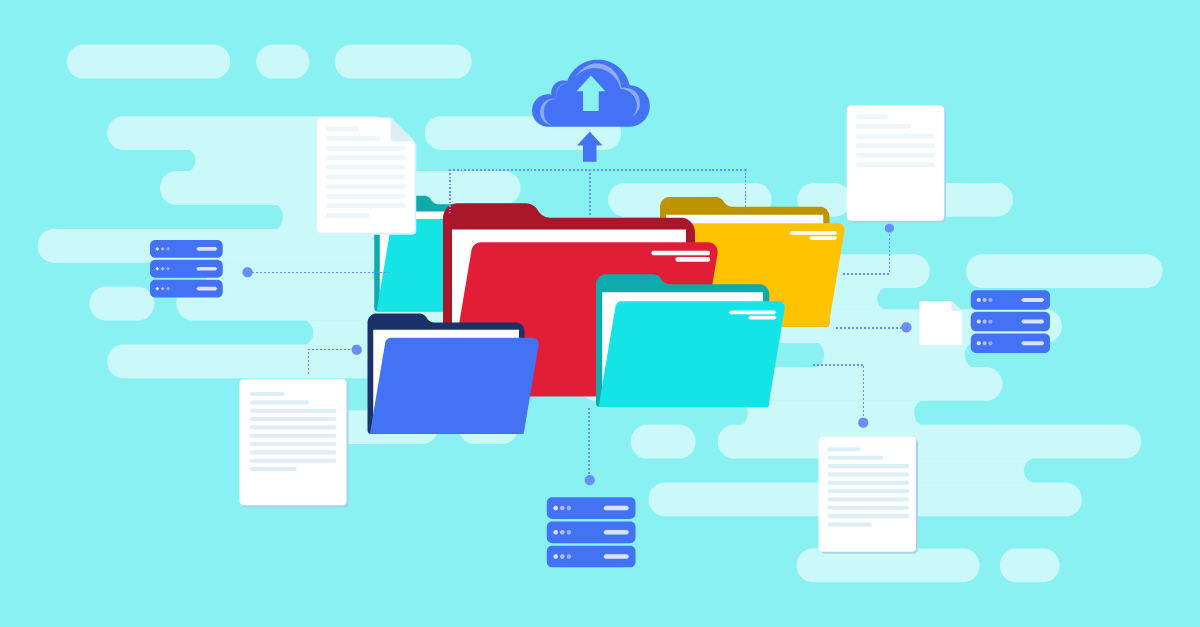
A shadow system is any tool, tracker, or process that a department builds to do a job its official systems don’t do or cannot do well enough. It’s rarely a single dramatic workaround. More often, it’s a slow accumulation: a departmental Access database that tracks effort commitments the ERP doesn’t capture cleanly, a shared drive full of award budget trackers that predate the current financial system, or a set of macros a grant administrator built five years ago that now half the office now depends on without fully understanding.
None of this happens because people are trying to go around the rules. These workarounds develop as people respond to real operational gaps in official systems and find practical ways to complete time-sensitive work.
The pattern is consistent across institutions. A research administrator may need to know how much of an award’s budget is committed versus spent, which subawards are approaching their end dates, or how the true burn rate compares with projected effort. The enterprise system may be unable to answer those questions directly, or the available report may take a week to run and arrive already out of date.
So, the administrator builds something faster. A spreadsheet. A simple database. A manual log. It works. It solves the immediate problem. Because it works, it stays in use long after the person who built it has moved to a different role. In many cases, it remains in use after others in the office have lost a clear understanding of how it works or why certain fields exist.
The costs of shadow systems rarely show up as a single visible failure. They accumulate quietly, and by the time they’re noticed, they’ve usually been compounding for years.
When institutional knowledge about a portfolio lives in one person’s spreadsheet rather than a shared system, that knowledge leaves with them. Many research administration offices have encountered a version of this problem: The person who “just knew” how a particular tracker worked retires, and the office spends months reconstructing logic that used to be automatic.
Shadow systems typically operate alongside the official system of record, creating parallel processes. As a result, the same data may be entered into the ERP to meet compliance requirements and entered again into the shadow system used for day-to-day operational analysis. Institutions rarely calculate the aggregate hours this duplicate work costs across an office, but the total can be substantial.
When five people each maintain their own tracker for the same portfolio, “the numbers” stop meaning one thing. A PI asks for a budget update and gets a different figure depending on which spreadsheet the answer came from. The figures may reflect different points in time, assumptions, or scopes. The resulting discrepancies erode trust in the data itself.
Perhaps the most consequential cost is the hardest to see: The institution’s operational picture becomes scattered across dozens of disconnected tools, none of which was designed to talk to the others. Sponsored programs have their trackers.
Departmental finance has its own. Central research administration has a third set. When leadership asks a portfolio-wide question—which awards are at risk, where is the institution overcommitted, what does the true pipeline look like—the honest answer is often that no single system can produce it, and the office has to reconstruct the picture manually before anyone can address the actual question.
It would be easy—and wrong—to conclude that the fix is to ban shadow systems and force everyone back into the official ERP. That misreads what’s actually happening. Shadow systems exist because they answer real operational questions that the official systems, on their own, do not. Addressing the underlying operational gap is essential because teams still need timely answers to the questions that led them to build these workarounds.
This is the same theme we’ve returned to across this series: Institutions don’t have a reporting problem. They have an operational visibility problem. Shadow systems are simply what operational visibility gaps look like once people have spent years working around them.
A durable approach starts by building the operational visibility that reduces the need for spreadsheets and ad hoc trackers. Research administrators need fast, current, portfolio-level answers within the systems they already use.
In practice, that means connecting the systems that already exist rather than replacing them wholesale. APIs can allow award data, effort data, and financial data to reference each other instead of living in separate silos. Workflow automation can keep information moving without requiring someone to re-key it into a second tracker. And, when those data sources are connected, governed, and maintained, AI can help identify patterns, summarize complex award histories, and surface items that may warrant closer review—such as awards trending toward overspend, portfolios that have not been reviewed recently, or changes that would otherwise require someone to manually compare multiple spreadsheets. AI can help assemble and interpret the picture faster so research administrators can apply their judgment sooner.
None of this replaces the judgment of the people doing the work. A research administrator still has to decide what a flagged risk actually means for a given PI relationship, how to handle a subaward that’s falling behind, or when a budget variance is a real problem versus a timing issue. What changes is how much of their day gets consumed just assembling the picture before they can start making those decisions.
Shadow systems, spreadsheet dependency, and unreliable forecasting are all stem from the same structural issue: sponsored programs and finance operate with different pictures of the same portfolios, built from different systems, updated on different timelines. In our next article, we’ll look directly at the operational distance between sponsored programs and finance—and why closing it matters more than any single reporting fix.
Attain Partners works with research institutions nationwide to help bridge the gap between system functionality, operational workflows, and institutional strategy. With the right strategy and the right partner, institutions can achieve measurable improvements in efficiency, compliance, and overall research administration performance, positioning their teams for long‑term success.
Learn how we can serve your institution.

Daniel Stowers, MBA, is a Senior Consultant with more than 13 years of experience in research administration, specializing in post-award accounting, compliance, and financial analysis. He supports institutions with ERP implementations and optimizations across platforms, including Workday, Kuali, SAP, and Lawson, with expertise spanning research finance, grants accounting, reconciliations, reporting, and business process modernization.

Keep Your Finger
on the Pulse!
Subscribe to our monthly email newsletter for expert content to solve your organization’s issues and advance your mission.
Keep Your Finger
on the Pulse!
Subscribe to our monthly email newsletter for expert content to solve your organization’s issues and advance your mission.