Blog
August 17, 2026

A student logs in to register for classes.
Instead of completing a simple task, they discover a hold they didn’t know existed. Financial aid sent an email last week, advising requires a separate portal, and support directs them to yet another website. After navigating multiple systems and repeating their question several times, the student finally finds the answer, but not before frustration, confusion, and lost time.
Most institutions recognize this experience.
Today, the digital environment touches nearly every consequential student moment from application to graduation. Websites, portals, mobile apps, learning management systems, advising platforms, chat tools, service desks, financial aid systems, and communications channels collectively shape how students understand what they need to do and how easily they can do it.
When those experiences work well, students feel supported, informed, and confident.
When they don’t, students encounter fragmented systems, inconsistent messaging, duplicate requests, unclear next steps, and support channels that require them to explain the same issue repeatedly.
These challenges create barriers to enrollment, persistence, and student success.
When institutions discuss digital transformation, the conversation often focuses on platforms, portals, and applications. Technology matters, but technology alone does not create a great student experience. The quality of the student digital experience is determined by deeper institutional capabilities.
Great student experiences depend on deeper institutional capabilities working together beneath the surface.
| What Students See The digital touchpoints students interact with every day | What Makes It Work The institutional capabilities that enable seamless, secure, and supportive experiences |
|---|---|
| Portal | Governance and ownership |
| Mobile | Business processes |
| Chatbot | Accessibility and inclusion |
| Website | Identity and access management |
| Support operations | |
| Communications strategy | |
| Continuous improvement | |
| These capabilities work together to power every student journey. | |
A student-facing dashboard may appear modern and polished. But if the underlying processes are fragmented or the data is unreliable, students will still encounter friction at critical moments. The visible experience is only as strong as the institutional capabilities supporting it.
Most institutions know they want to improve the student experience. Far fewer have a shared framework for understanding where they are today, where they want to go, and what capabilities must be developed along the way. That is where a maturity model becomes valuable.
A maturity model transforms broad aspirations such as “improve the student experience” or “digitally transform services” into a practical roadmap. It provides a common language for leaders across technology, enrollment, student affairs, advising, finance, and academic operations.
Rather than focusing on individual technologies, it helps institutions evaluate the capabilities required to create consistently effective student experiences.
The Student Digital Experience (SDX) Maturity Model describes five progressive stages of institutional capability.
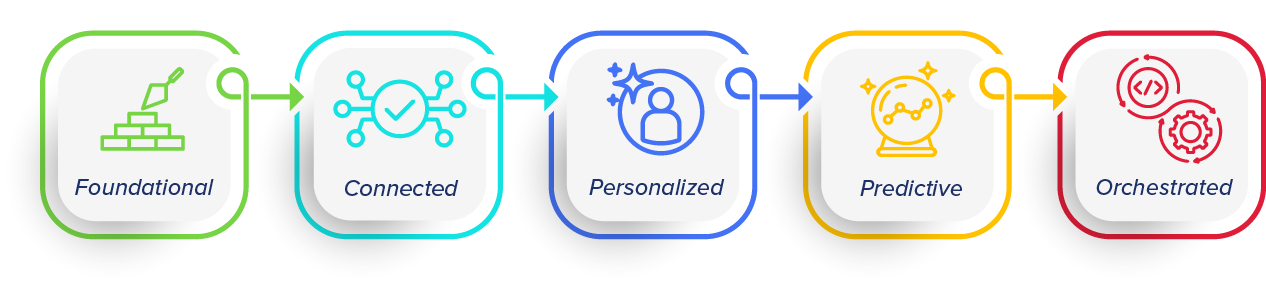
Digital services exist, but they often feel fragmented and difficult to navigate.
Systems and services begin working together.
Experiences become relevant to individual students.
Institutions proactively identify opportunities and risks.
Digital services operate as a coordinated institutional capability.
The goal is to create experiences that reduce effort, increase clarity, and help students succeed.
One of the most important concepts in the SDX framework is the shift from office-centered thinking to journey-centered design.
Students do not experience admissions, registration, advising, financial aid, billing, and support as separate administrative functions; rather, they experience an interconnected sequence of tasks, questions, deadlines, decisions, and emotions.
Consider a student attempting to register for classes.
At the same time, they may be navigating advising requirements, prerequisites, financial aid issues, schedule conflicts, course availability, and work obligations. To the student, these challenges are part of a single journey. Yet institutions often manage them through separate offices, systems, and processes. Even when each department performs well individually, students may still experience significant friction.
Mature digital experiences require institutions to design around journeys rather than organizational boundaries.
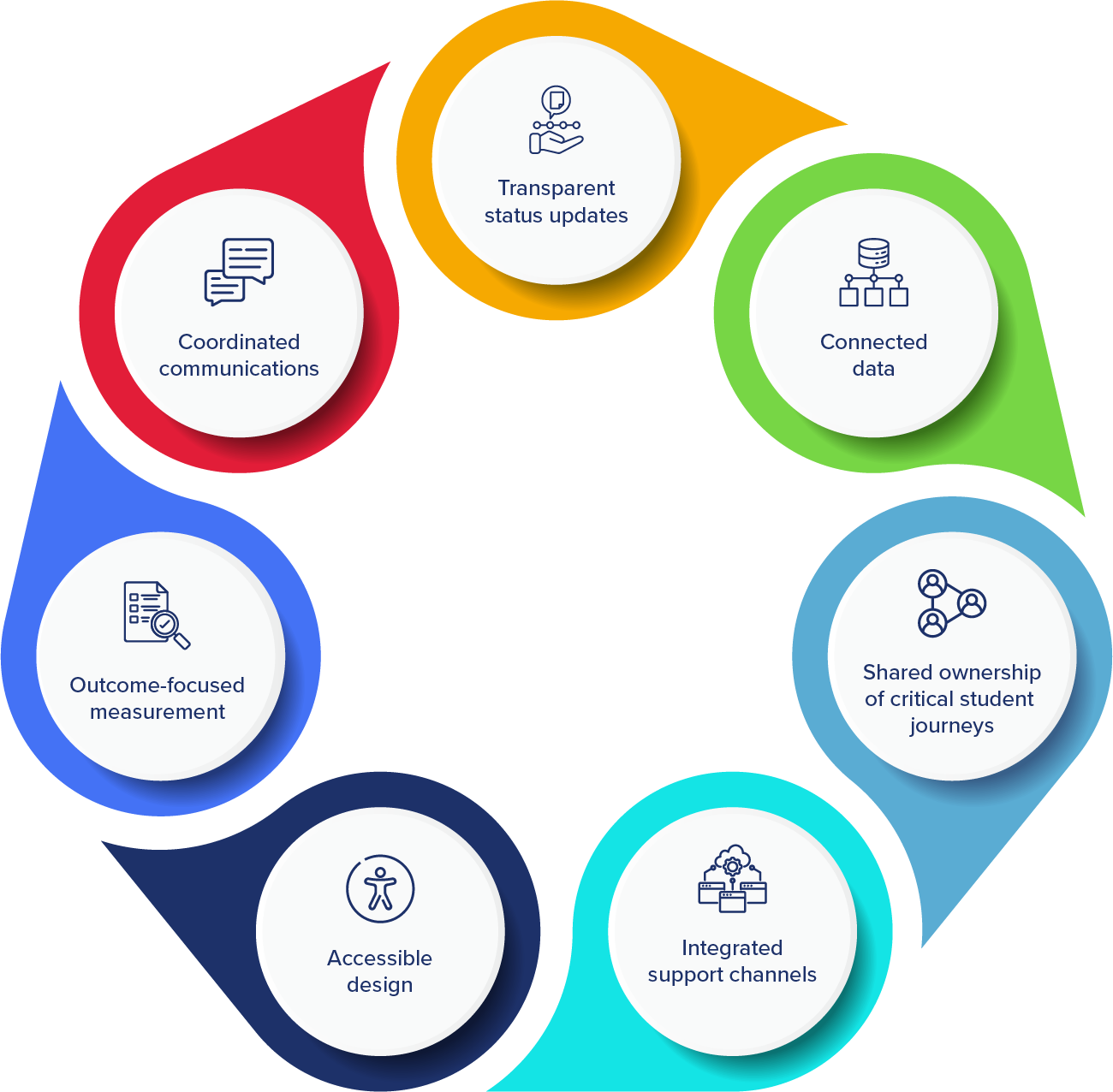
The question shifts from, “Did our office complete its task?” to, “Could the student complete the journey clearly, quickly, and confidently?”
Artificial intelligence is rapidly changing expectations for digital experiences. AI can help institutions improve self-service, triage requests, recommend next steps, generate content, identify risk signals, and support staff decision-making. But AI is not a shortcut around foundational work.
This is why the SDX Maturity Model treats AI as one dimension of maturity, not the definition of maturity itself. Successful AI initiatives are built on strong foundations, not substitutes for them.
Ensure clear routes to human support when AI reaches its limit.
Ensure data quality, security, and appropriate use.
Establish policy, roles, and accountability.
Keep humans in the loop for judgement, review and decision-making.
Institutions often measure digital performance using metrics such as system uptime, page views, call volume, or ticket counts. While useful, these measures do not fully capture whether students can successfully complete important tasks.
More mature institutions focus on experience outcomes, including:
In other words, measurement evolves from reporting activity to managing experience.
No institution can redesign every student journey at once.
The most successful organizations typically begin with a small number of high-volume, high-stakes journeys, such as:
These are moments where friction directly affects student confidence, staff workload, retention, and institutional outcomes. By improving a few critical journeys first, institutions can demonstrate value, build cross-functional collaboration, and establish repeatable practices for future transformation.
Student digital experience maturity is about becoming more accessible, more coordinated, more transparent, and more trustworthy. It helps students understand what matters, complete what is required, and access support without unnecessary effort.
The true defining measure of digital maturity is whether students can complete their most important journeys clearly, confidently, and successfully.
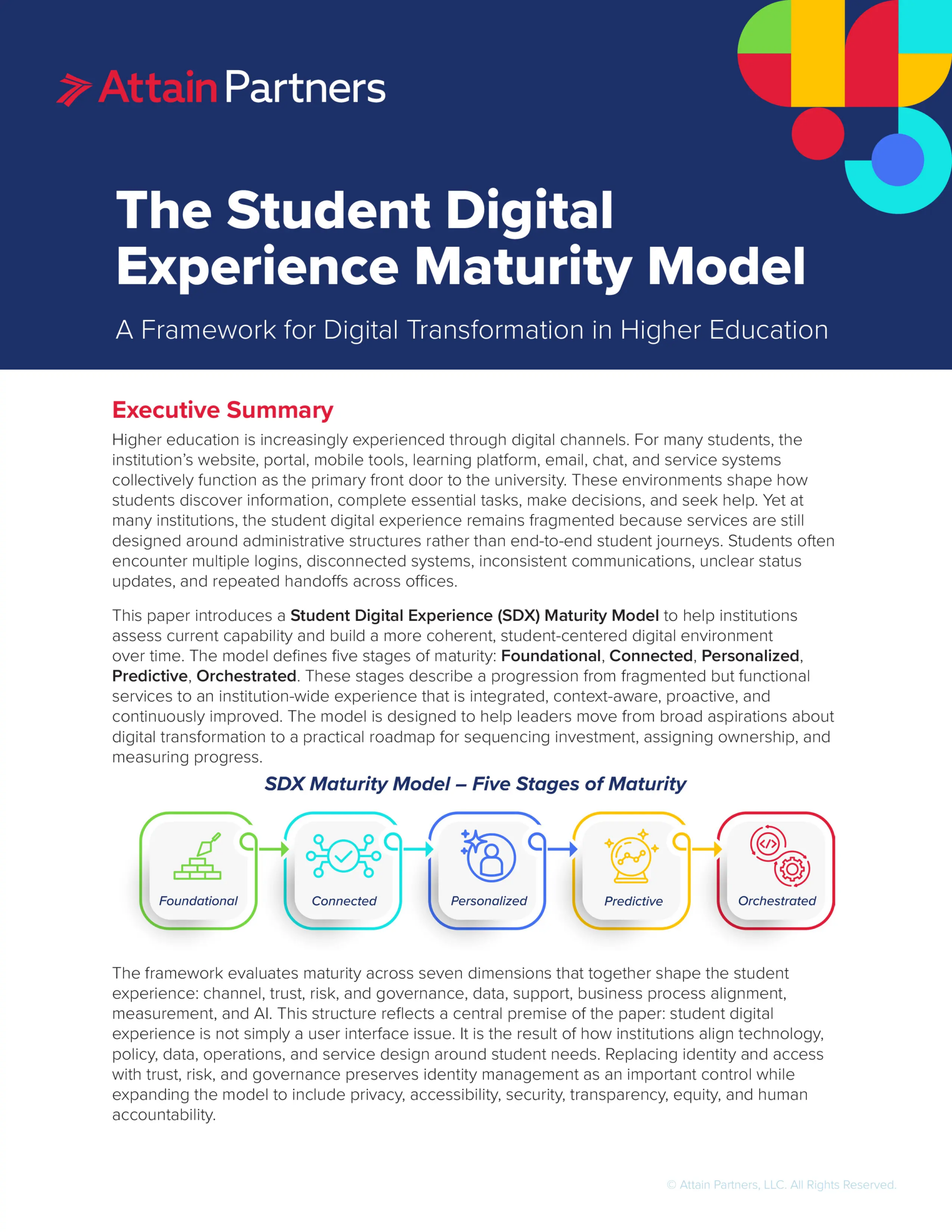
Where does your institution fall on the journey from fragmented digital interactions to connected, personalized, predictive, and orchestrated student experiences?
Download our Student Digital Experience Maturity Model whitepaper to assess your institution’s current maturity, understand the capabilities that support connected student experiences, and identify opportunities to improve digital services across the student journey.
In part two of this series, we explore the first three levels of the SDX Maturity Model—Foundational, Connected, and Personalized—and examine how institutions can build the core capabilities that make digital services reliable, integrated, and relevant to every student.
Creating a mature student digital experience requires coordinated governance, integrated processes, trusted data, and thoughtful technology strategy. Attain Partners works with higher education institutions to design and implement operating models that improve student journeys, strengthen institutional capabilities, and support long-term digital transformation.

John Knost is a seasoned leader with over 25 years of experience in higher education student operations, compliance, and technology transformation. He has successfully held leadership positions in large-scale ERP and CRM implementations, including Workday and Salesforce, across multi-campus systems. John holds a Master of Science in Higher Education Administration and a Graduate Certificate in Enrollment Management from the University of Miami.

Keep Your Finger
on the Pulse!
Subscribe to our monthly email newsletter for expert content to solve your organization’s issues and advance your mission.
Keep Your Finger
on the Pulse!
Subscribe to our monthly email newsletter for expert content to solve your organization’s issues and advance your mission.