Blog
September 23, 2026
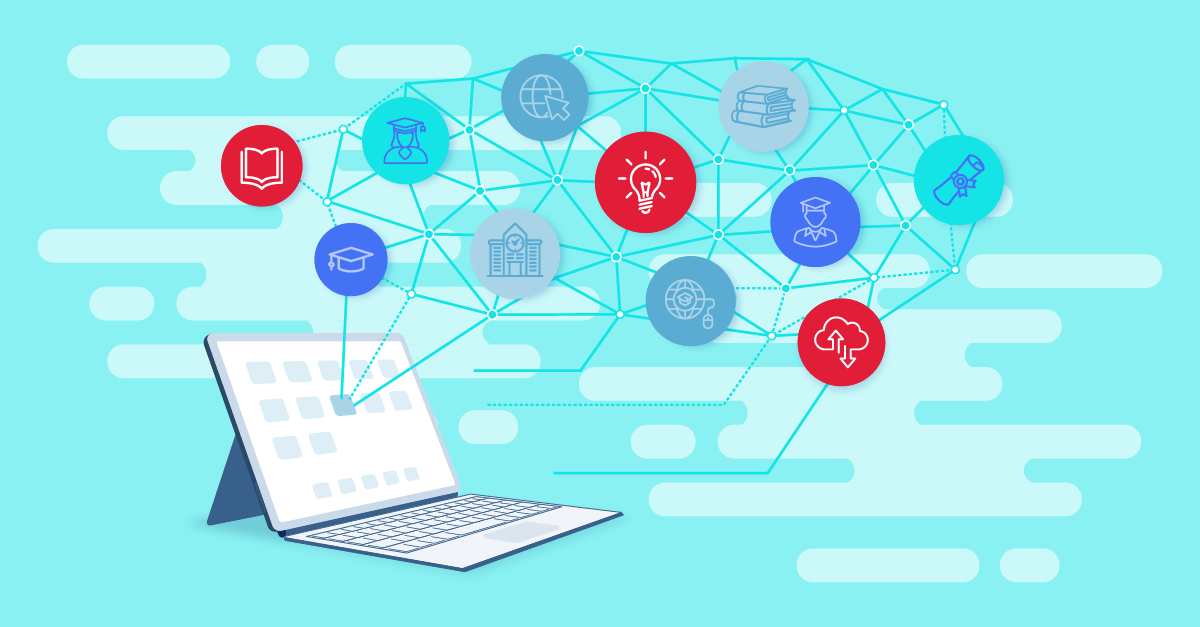
Student digital experience, or SDX, encompasses the portals, apps, forms, chat tools, and service platforms students use to complete important tasks and how those touchpoints work together across the institution. Across the student journey, the digital layer shapes whether the institution feels clear and coordinated or requires students to navigate their way through disconnected systems, repeated handoffs, and unclear next steps.
The SDX Maturity Model gives higher education leaders a shared language for improving that experience, describing five levels of capability: Foundational, Connected, Personalized, Predictive, and Orchestrated.
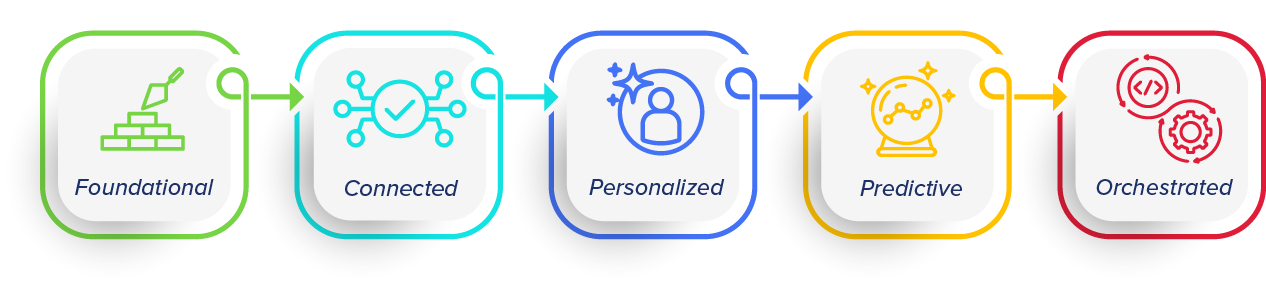
The Student Digital Experience (SDX) Maturity Model
The first three, covered earlier in this series, establish the core capabilities: clear access, connected workflows, governed data, contextual guidance, and support that carries information forward.
Earlier in the Student Digital Experience Maturity Model Series
Blog 1: Why Higher Education Needs a Student Digital Experience Maturity Model
Explore the five levels of the SDX Maturity Model and the institutional capabilities that support more coordinated, accessible, and trustworthy student experiences.
Blog 2: Building the Foundation for Student Digital Experience Maturity
Explore the Foundational, Connected, and Personalized levels and how institutions can strengthen access, workflows, data governance, and contextual student support.
In the final installment of the series, we’ll focus on the last two levels: Predictive and Orchestrated. These levels build on governance, accessibility, data quality, and process design, enabling institutions to anticipate needs, surface issues earlier, coordinate interventions, and improve high-impact journeys.
At the Predictive level, institutions use governed indicators, analytics, and case management to identify issues earlier. The goal is to identify when a student may need timely support and connect that student to a clear path forward without reducing individual circumstances to a risk score.
For students, predictive maturity should mean fewer surprises. A missing requirement can trigger a timely prompt with a direct link before the deadline, while coordinated outreach can provide clear guidance on what to do next.
A useful analogy is a bank fraud alert. The customer does not need to detect the suspicious pattern manually. The system identifies something that may require attention and sends a clear prompt with a low-friction response path. Predictive SDX works in a similar way: it identifies likely issues early, explains what needs attention, and connects the student to the next best action.
Effective prediction depends on the institution’s ability to act on the information. Many institutions have dashboards, alerts, and analytics, but lack the operational workflows to act on them consistently. An alert without ownership becomes noise. A risk signal without a playbook can lead to inconsistent outreach. A prediction without transparency can undermine trust. Predictive maturity requires data, governance, workflow, support, and measurement to work together.
At the channel level, predictive SDX surfaces alerts and next-step prompts in the places students already work: the portal, mobile app, registration system, financial aid workflow, learning environment, advising platform, or support channel. Students should not have to search for hidden warnings. If action is required, the prompt should be timely, plain-language, and directly connected to the workflow that resolves the issue.
Examples are easy to see in common journeys. A student who has registered but has not submitted an immunization record receives the deadline, reason, upload link, and support option. A student with a financial aid verification issue sees what is missing, what has been received, and what to do next. A student whose course activity suggests disengagement receives supportive outreach with options for advising, academic support, or instructor contact.
Trust, risk, and governance are central. Predictive systems use data in ways that can meaningfully affect students, so institutions must define which data can be used, for what purpose, and with what safeguards. Sensitive decisions need human review, and models should be monitored for accuracy, equity, and unintended consequences.
Predictive maturity also introduces prescriptive support. Prediction asks, “What might happen?” Prescriptive support asks, “What should we do next?” A student may need a reminder, a self-service link, advisor outreach, financial counseling, instructor follow-up, or escalation to a specialized team. The best next action depends on student context, urgency, available resources, and evidence about which interventions work.
Support at this level is organized through shared playbooks and case ownership. When a signal appears, the institution should know who responds, what message is sent, when escalation occurs, and how the case is closed. If a student completes the required action, the system should record progress and stop unnecessary reminders.
At the Orchestrated level, SDX becomes an institution-wide capability. Student-facing digital services work together across channels, systems, offices, data flows, support models, and governance structures to create a coherent end-to-end experience.
Orchestration coordinates the right information, workflow, support, and human judgment at the right moment. Students receive consistent status and next steps without repeating their story. Staff see ownership, context, and progress. Leaders manage performance at the journey level.
Consider a student asking why they have a registration hold. In an orchestrated experience, the system provides a plain-language explanation and a direct link to the required action. The student uploads documentation. The relevant office receives the case. The student receives status updates. If the document is approved, the hold is removed, and the student is notified. If it is rejected, the student receives a clear explanation and next step. If the deadline is approaching, the case escalates to human support.
Trust, risk, and governance operate as institution-wide capabilities. Authentication and authorization are unified. Least-privilege access is enforced across systems. Privacy and accessibility controls are embedded into journey operations. AI and analytics are governed continuously throughout their lifecycle.
Data maturity at the Orchestrated level is event-driven. Status changes, submissions, holds, approvals, messages, and case updates can trigger appropriate actions across systems. If a student submits a required document, the workflow updates, the support case reflects progress, the checklist changes, and the student receives confirmation. If a course section fills, students on relevant pathways may receive alternatives. If aid status changes, related billing and registration guidance can update.
Support is continuous and context-aware. Case management and workflow orchestration connect offices, so handoffs are visible, and ownership is clear. Automation handles routine steps where appropriate, while human support remains available for complex, sensitive, or consequential matters. Students receive updates until resolution, and staff know what has already happened and what should happen next.
Measurement shifts fully to experience-level performance. Institutions track completion rates, time to resolution, repeat contacts, satisfaction, accessibility outcomes, equity impacts, and the results of improvement efforts. These measures help leaders manage the experience rather than merely report system activity.
At the Orchestrated level, AI becomes a governed institution-wide capability. It may support case summarization, smart routing, next-best-action recommendations, proactive alerts, content generation, and bounded automation. Mature AI use maintains institutional accuracy, privacy, security, accessibility, and equity. Consequential decisions should have meaningful human review.
The full SDX maturity journey begins with reliability and access, then progresses through Connection, Personalization, Prediction, and Orchestration. Institutions should not skip the foundational work. Each level depends on the capabilities established before it: governed data supports personalization, accountable workflows support prediction, and human review and transparency support responsible automation. Maturity is a sequence of capabilities that together create a clearer, more trustworthy student experience.
For higher education leaders, the path forward is practical: choose a few moments that matter, map the journey from the student perspective, clarify ownership, connect systems and handoffs, use governed data, develop predictive playbooks, measure outcomes, and build continuous improvement routines.
This concludes the three-part series on the Student Digital Experience Maturity Model. Across all five levels, SDX maturity builds the institutional capabilities needed to make student journeys clearer, faster, more equitable, and more trustworthy over time.
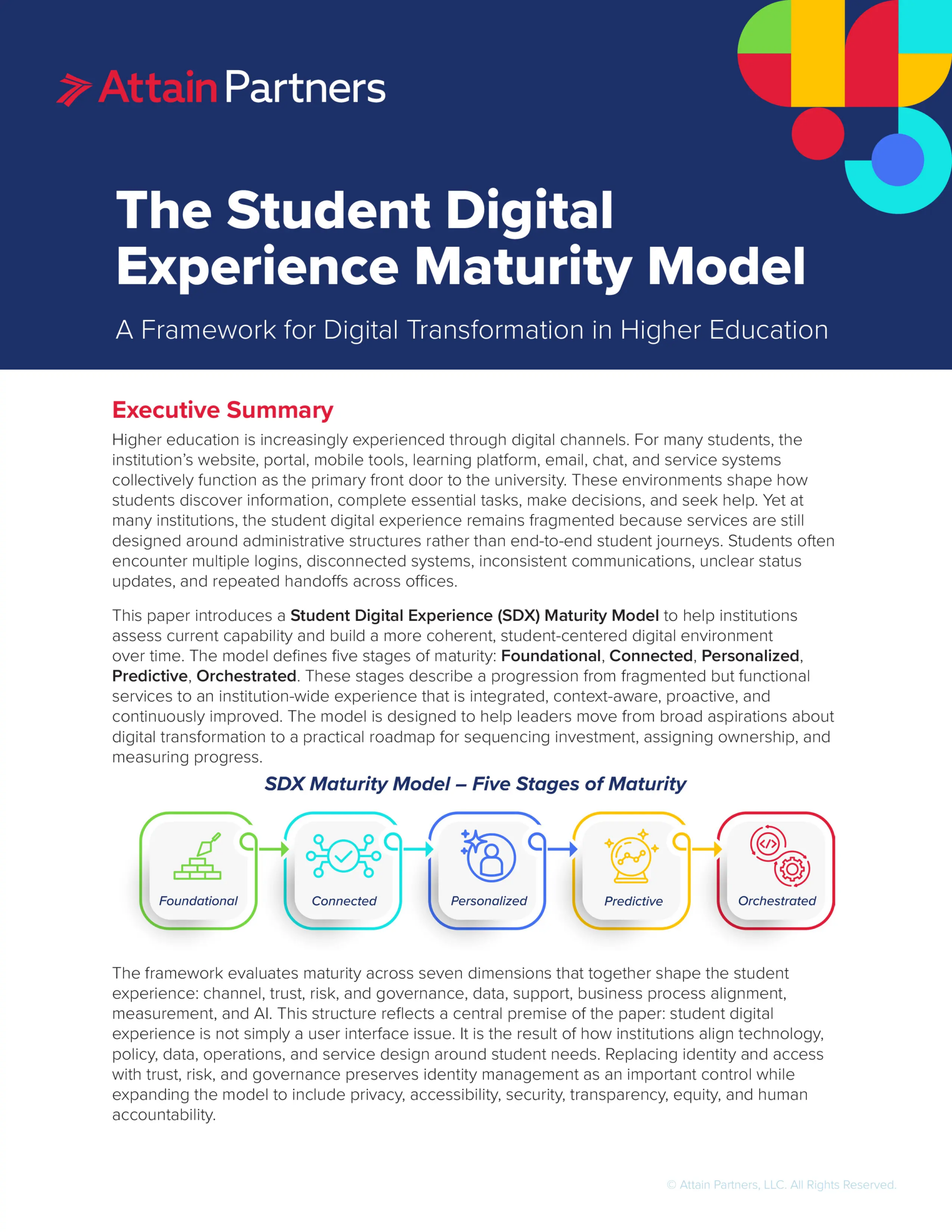
Where does your institution fall on the journey from fragmented digital interactions to connected, personalized, predictive, and orchestrated student experiences?
Download our Student Digital Experience Maturity Model whitepaper to assess your institution’s current maturity, understand the capabilities that support connected student experiences, and identify opportunities to improve digital services across the student journey.
Creating a mature student digital experience requires coordinated governance, integrated processes, trusted data, and thoughtful technology strategy. Attain Partners works with higher education institutions to design and implement operating models that improve student journeys, strengthen institutional capabilities, and support long-term digital transformation.

John Knost is a seasoned leader with over 25 years of experience in higher education student operations, compliance, and technology transformation. He has successfully held leadership positions in large-scale ERP and CRM implementations, including Workday and Salesforce, across multi-campus systems. John holds a Master of Science in Higher Education Administration and a Graduate Certificate in Enrollment Management from the University of Miami.

Keep Your Finger
on the Pulse!
Subscribe to our monthly email newsletter for expert content to solve your organization’s issues and advance your mission.
Keep Your Finger
on the Pulse!
Subscribe to our monthly email newsletter for expert content to solve your organization’s issues and advance your mission.